 Start
Start
On April 19, 2024, tenant Michael Gasio transmitted a lawful payment via federal wire transfer to landlord Phat Tran’s Wells Fargo account ending in 9166. The message accompanying the transfer read “New lease 24 one payment at 5000.” This payment constitutes an electronic acceptance and performance under federal banking law and California Civil Code §§1583, 1626, and 1655.
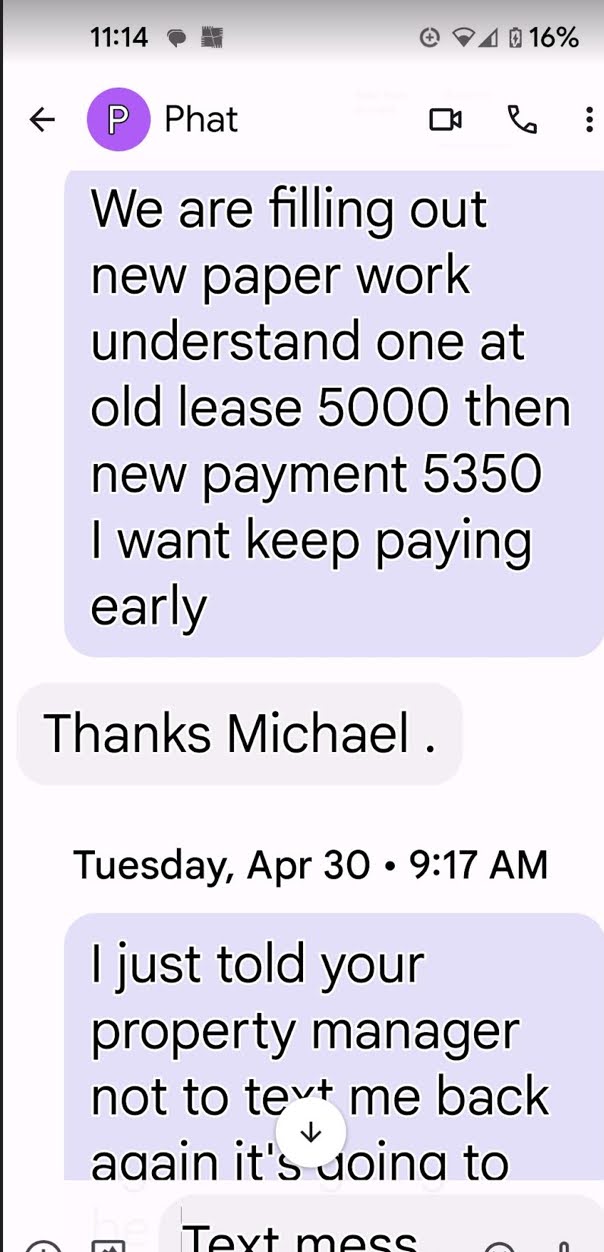
Shortly after the payment cleared, Phat Tran confirmed receipt, texting the tenant: “We are filling out new paperwork, understand one at old lease $5000 then new payment $5350. I want keep paying early. Thanks Michael.” This statement is an affirmation of contract renewal and acceptance of terms, meeting legal definitions of offer and acceptance by performance.
For June rent the second payment 2024 year 3, the owner wrote: “Sorry I didn’t know you did pay your rent to the Hanson account. I just texted him to find out.” This admission, in writing, confirms payment receipt May 30th 2024 and eliminates any claim of nonpayment to the court.
The above transactions and messages establish electronic payment, acknowledgment, and mutual assent under law. Any subsequent denial, concealment, or redirection of these funds constitutes:
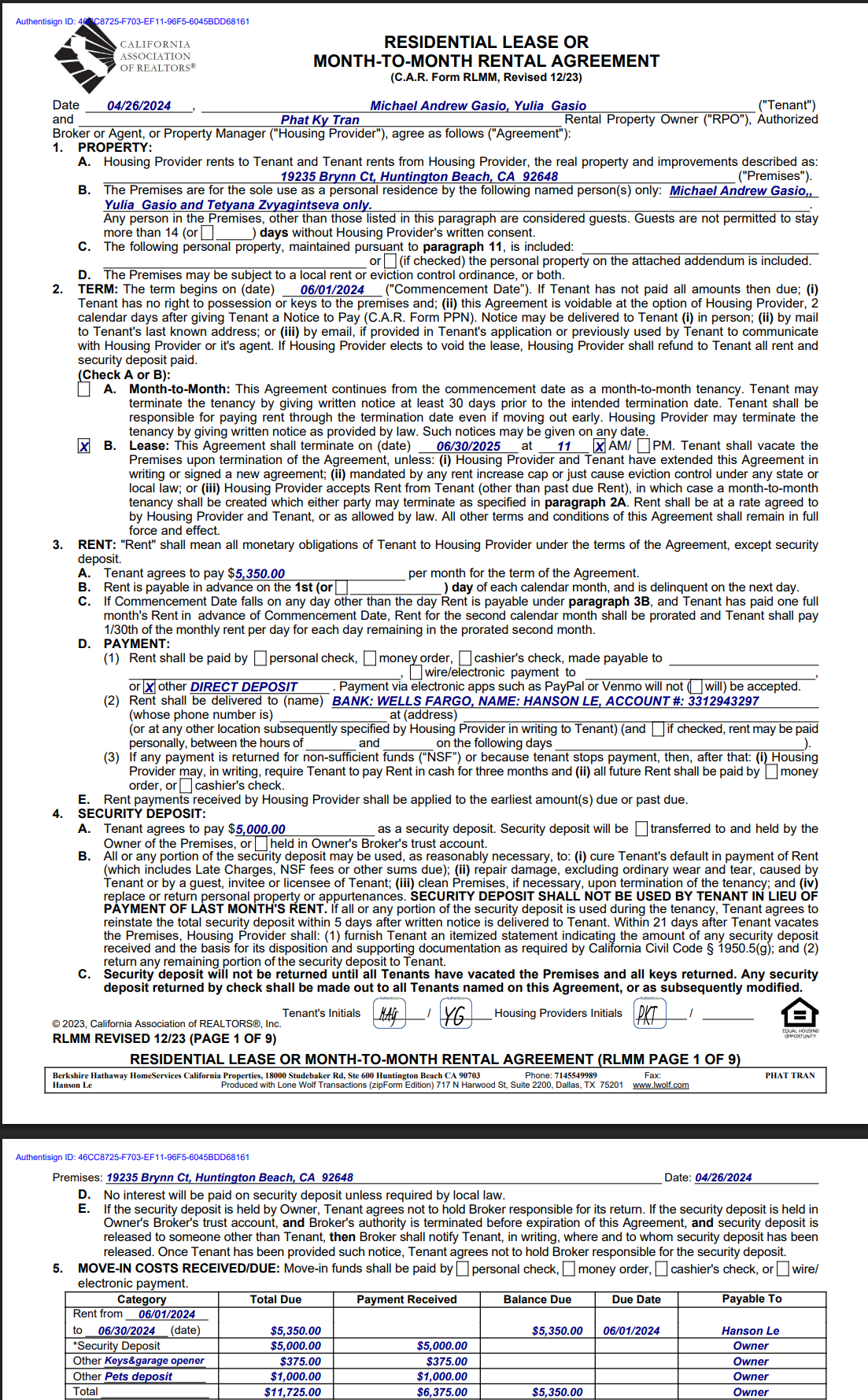
In April 2024, Hanson Le facilitated the contract extension while operating as agent under Berkshire Hathaway. Subsequent messages confirm all parties signed and recognized the renewal prior to quitting the fraud. Despite this, the landlord and agent later denied the existence of the contract in court, a knowing misrepresentation constituting fraud upon the court and criminal perjury under 18 U.S.C. §1621.
This record proves that on April 19, 2024, a valid federal wire payment was made and accepted under the renewed lease. The landlord’s later denial of the transaction and non-return of the funds satisfy all statutory elements of wire fraud, bank fraud, and obstruction of justice.