In California, for the landlord to refuse to fix the dishwasher depends heavily on the terms of your lease agreement, but in general, if an appliance is provided as part of the rental advertisement, the landlord is responsible for its maintenance. You likely had the right to repair and deduct the cost from your rent, but you must follow specific legal procedures.
Landlord's Responsibility
Lease Agreement: The most important factor is your lease. If the dishwasher was included in the lease as an amenity, the landlord is typically responsible for its repair or replacement, as they have an express or implied promise to maintain it.
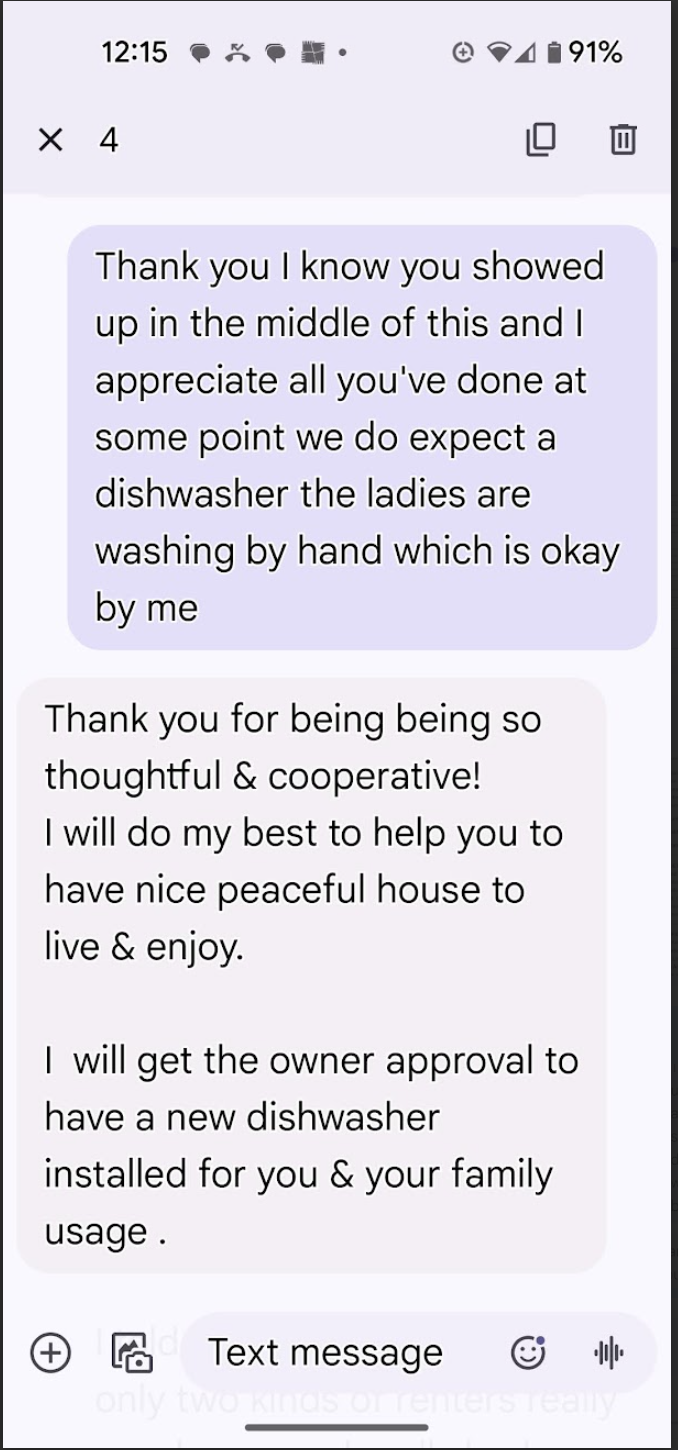
Verbal Promises: The owner and property manager told you they would fix it before you signed the contract, which could be considered an implied or verbal contract.
This strengthens your case that the landlord is responsible.
Habitability Laws: A broken dishwasher is generally considered a non-essential amenity, not a major habitability issue like a lack of hot water or heat, so the landlord has a "reasonable time" (often considered around 30 days in California for non-emergency repairs) to fix it.
Two months is likely beyond a reasonable time.
Tenant's Options
Because the landlord failed to act within a reasonable time, you likely had legal recourse.
This exhibit captures Berkshire Hathaway agent Hanson Le explicitly confirming that the dishwasher would be installed prior to final contract execution. This representation was a material condition relied upon by the tenant in deciding to proceed with the lease.
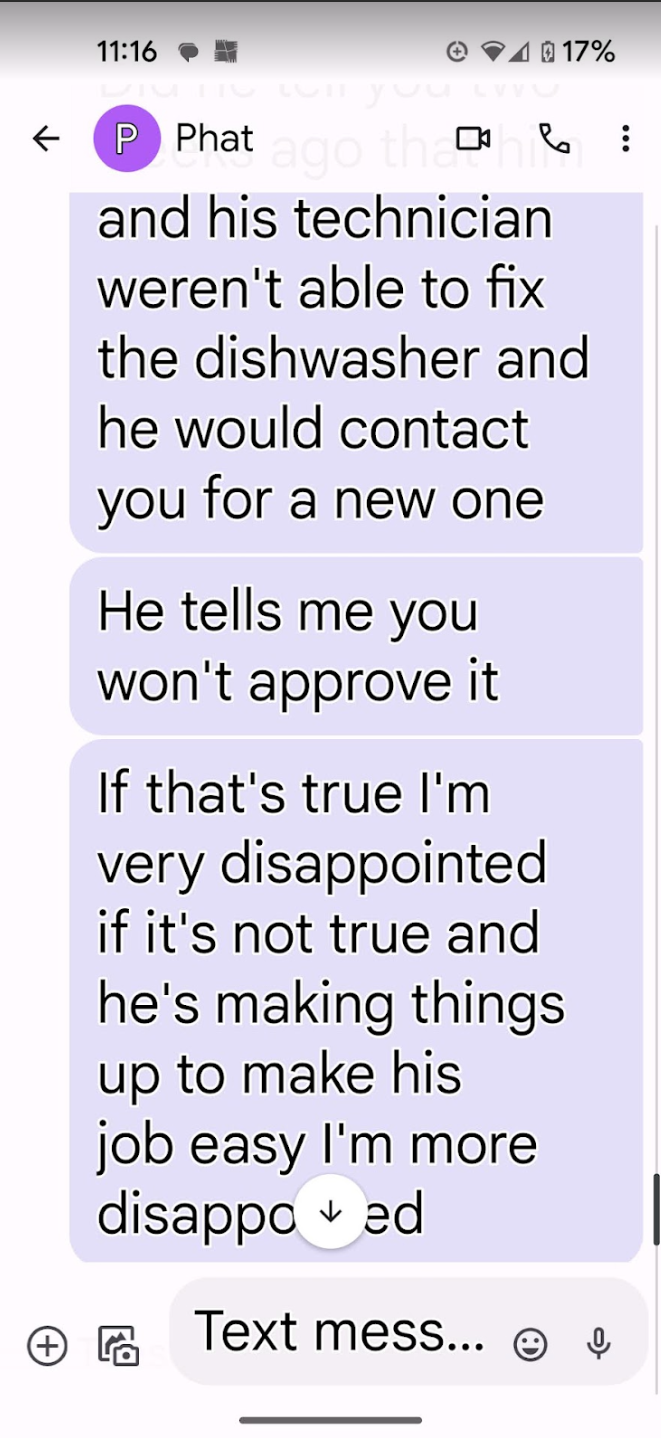
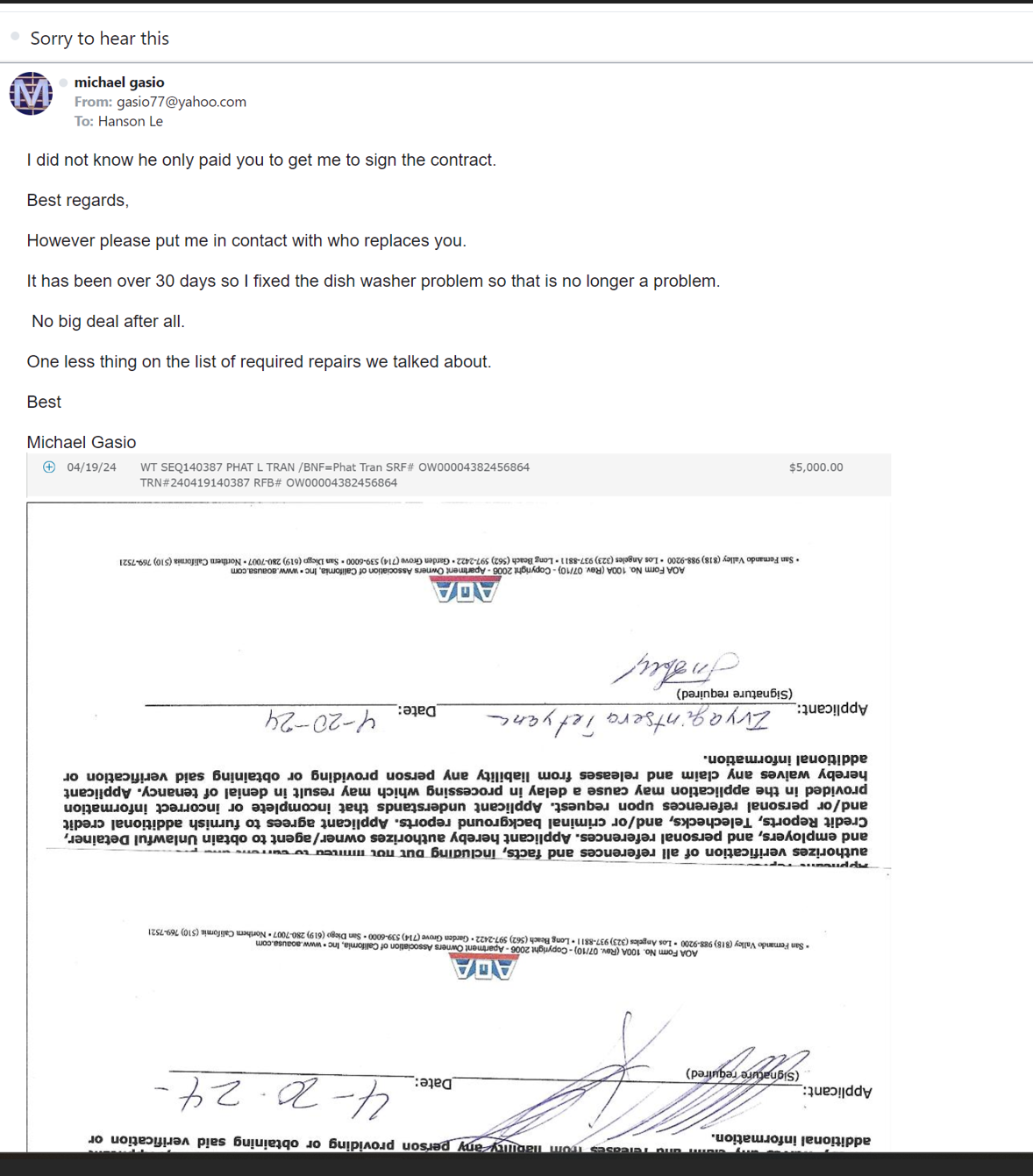
The promised installation was never completed. The agent later withdrew, refused to coordinate repairs, and disclaimed responsibility despite being the signing agent on the lease. This failure forms part of the broader pattern of:
- Misrepresentation at the time of contract negotiation
- Failure to perform promised habitability repairs
- Evasion of duty after receiving payment
- Constructive fraud aligned with the broader lease-fraud sequence